
Expert Baker Tips
From one baker to another, welcome to the wonderful world of wild yeast. Here is a collection of my top 20 tips to help you on your sourdough journey.
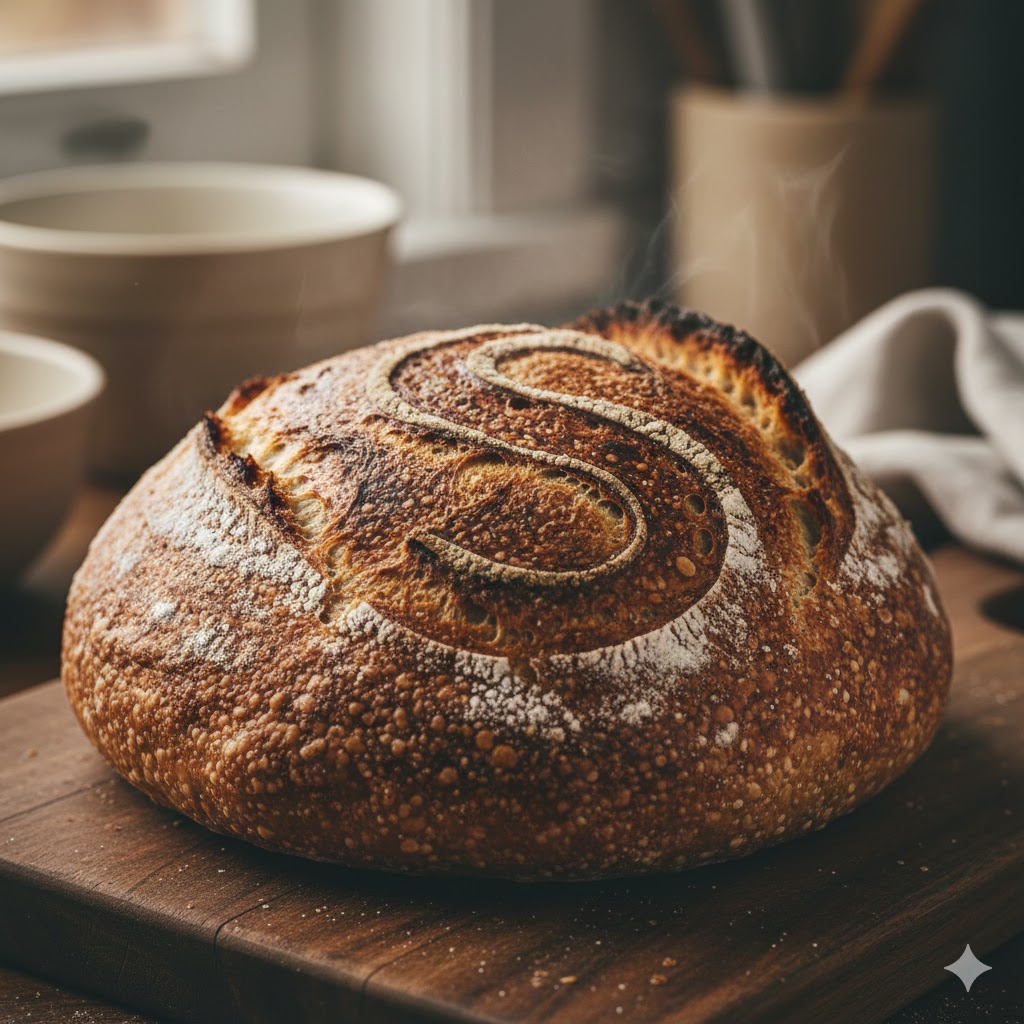
Top 10 for Beginners
Know Your Rhythm: Get to know your starter by feeding it at the same time every day to learn its unique rhythm and peak activity.
Trust the Weight: Use a digital scale for every ingredient, as volume measurements like cups are too inconsistent for the precision sourdough requires.
Dough Over Clock: Watch the dough, not the clock, because ambient temperature and starter strength will dictate fermentation speed more than a recipe’s timeline.
Handle with Care: Master the "stretch and fold" technique to build gluten strength gently without degassing the delicate bubbles forming inside the dough.
Control the Heat: Temperature is a literal ingredient, so aim for a consistent bulk fermentation environment of around 24°C to 26°C for predictable results.
The Power of Cold: Don't skimp on the cold proof; letting your shaped loaf rest in the fridge overnight improves flavor and makes the dough easier to score.
Trap the Steam: Invest in a Dutch oven to trap steam during the first half of the bake, which is the secret to achieving a professional "oven spring" and crispy crust.
Score Swiftly: Score with confidence using a swift, decisive shallow cut at a 45-degree angle to control where the bread expands.
The Hardest Wait: Wait before you slice at least two hours after baking, as the internal structure is still "setting" and cutting early results in a gummy texture.
Beautiful Failures: Embrace the "ugly" loaves, because even a flat or over-proofed bread usually tastes delicious and provides the best data for your next bake.
Level Up Your Loaf
Flour Quality: Use high quality strong white flour whenever possible, as the higher protein content provides the structural support needed for a tall, airy crumb.
The Discard Jar: Keep a "discard" jar in the fridge for the portion of starter you don't use; it makes incredible pancakes, waffles, and crackers.
The Autolyse: Autolyse your flour and water by mixing them 30 to 60 minutes before adding salt to jumpstart gluten development and make the dough more extensible.
Wet Hands: Wet your hands before handling the dough to prevent sticking without adding extra flour, which can throw off your hydration levels.
Transparent Proofing: Use a transparent straight-sided container for bulk fermentation so you can easily see exactly when the dough has increased in volume by 50%.
Extreme Preheating: Preheat your baking vessel for at least 45 to 60 minutes at 230°C to 250°C to ensure the heat transfer is immediate the moment the dough hits the surface.
The Hollow Tap: Test for "doneness" with sound by tapping the bottom of the loaf; it should sound hollow, or use a thermometer to check for an internal temp of about 98°C.
Peak Performance: Feed your starter "peak to peak"—if you want a less sour bread, use your starter right when it hits its highest point before it begins to fall.
Baking Journal: Document your bakes in a simple notebook, noting the room temperature, timings, and flour types so you can replicate your wins.
Zero Waste: Repurpose your "fails" by turning flat or dense loaves into golden croutons, breadcrumbs, or a rich Panzanella salad—nothing is ever truly wasted.